
The One-Sentence Rule, and When It Doesn't Apply
If your garage door has come off its track, the rule is simple: stop touching the opener, leave the door exactly where it stopped, and keep people and vehicles away from it until someone who knows what they're doing can look at it. The exceptions are narrow. If a vehicle is trapped halfway in or out and a storm is bearing down, or if someone is pinned or in immediate danger, safety for people comes first — call 911 if there's an injury, and only move the vehicle if it can be done without forcing the door itself. Outside of those situations, resist the urge to "just get it back on the track" yourself. More damage, and more injuries, happen during that well-meant fix than during the original derailment.
What Actually Happens When a Door Jumps the Track
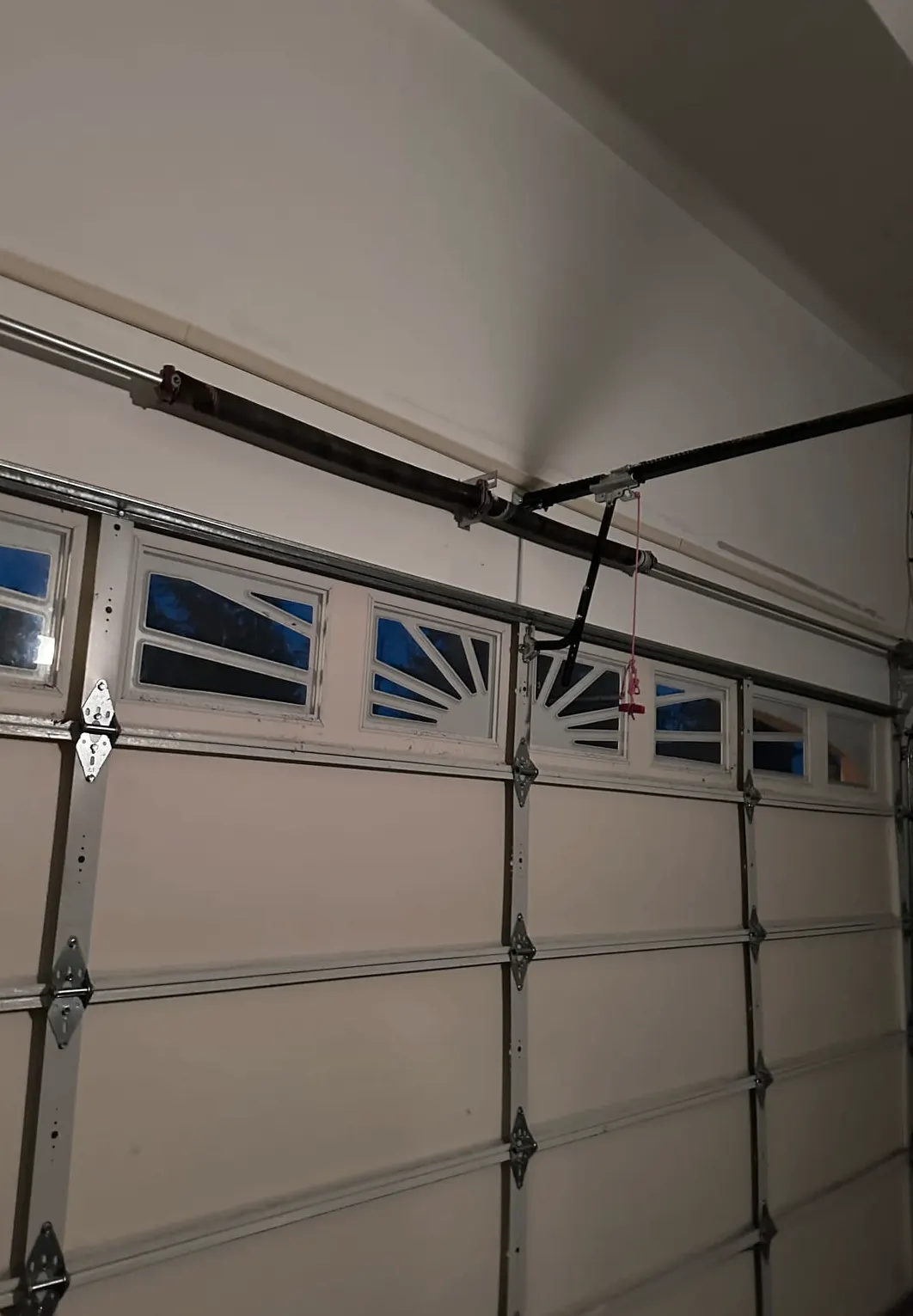
A garage door rides on rollers that travel inside a steel track, held under constant tension by one or two springs overhead. When a roller pops out — because a cable snapped, a hinge cracked, the track got bent, or the door was forced against an obstruction — the panel is no longer supported the way it's designed to be. It may be leaning at an angle, resting on one corner, or hanging from a single point. The spring is often still under tension even though the door isn't moving, which means the system is storing energy that can release suddenly if something shifts.
In this part of Florida, humidity and afternoon downpours make this worse in a specific way. Moisture swells wood door frames and jambs, which changes how tightly a door seats against the track over a season. Salt-tinged, humid air also accelerates rust on tracks, rollers, and hinge brackets, so metal that looks solid can be pitted and weaker than it appears. A door that's been quietly corroding all summer is more likely to jump the track the first time it's pushed hard — by a gust ahead of a storm, by a car bumper nudging it, or just by age finally catching up with a worn roller.
What Not to Touch
- The opener button or wall switch. Powering the door when a roller is out of the track can bend the track further, snap more hardware, or pull the door down unevenly.
- The springs. Torsion springs above the door and the cables running down to the bottom brackets are under high tension. If a cable has already failed, the opposite side may still be loaded and can whip or drop the door without warning.
- The bottom corners of the door, if it's leaning. A door resting unevenly can shift its weight suddenly if nudged, especially on a sloped or uneven garage floor.
- Any bent section of track you're tempted to muscle back into shape. Track metal that's been forced once is weaker, and bending it back by hand rarely restores true alignment — it usually just relocates the problem.
If the Door Is Partway Open or Closed
Don't try to manually push or pull it the rest of the way. A door stuck mid-travel with a roller out of the track can be resting on the track lip or a single hinge point. Moving it can let it drop the remaining distance fast.
What to Actually Do
- Disconnect the opener. Pull the red emergency release cord (if it's safe to reach without forcing the door) so the opener motor can't engage accidentally.
- Clear the area. Move vehicles, bikes, and people out from under and in front of the door. Treat the space like it's loaded, because it is.
- Secure the garage if a storm is approaching. If wind-driven rain is coming and the door can't be closed safely, block the opening from the inside with anything sturdy you have, rather than forcing the door itself. A door that's already off track provides none of its normal wind resistance.
- Photograph what you see. A few pictures of the roller position, the bent section of track, and any snapped cable help a technician bring the right parts on the first visit.
- Leave the rest alone. No WD-40, no hammer taps on the track, no attempts to re-seat the roller by hand. Let a technician assess tension and alignment before anything moves.
Why This Shows Up More Here Than in Drier Climates
Lake County's combination of heat, humidity, and hurricane-season wind loads puts extra stress on garage door hardware. Wind-load-rated doors and bracing are built to handle sustained pressure, but a door already compromised by rust or a cracked roller doesn't have the same margin. Add a sudden gust during an afternoon downpour, and a marginal roller or track becomes a derailed door. This is also why off-track incidents cluster around storm season — not because the door failed randomly, but because it was already weakened and the weather supplied the final push.
When to Call Sorrento Garage Door
This is exactly the kind of job that calls for a technician rather than a YouTube fix. Sorrento Garage Door's off track door repair service starts with releasing tension safely, checking the rollers, cables, and hinges for damage, and re-aligning or replacing the track section before the door ever gets powered again. If the derailment was caused by a snapped cable or worn rollers — common after a season of humidity and use — our garage door cable and roller replacement service addresses the root cause so it doesn't happen again on the next windy afternoon. We'll also check spring tension while we're there, since a door that jumped the track once is worth a full once-over rather than a quick patch.
If your garage door has come off its track anywhere in Sorrento, Mount Dora, Eustis, Tavares, or the surrounding Lake County area, leave it alone and call Sorrento Garage Door for fast, same-area service you can trust.